
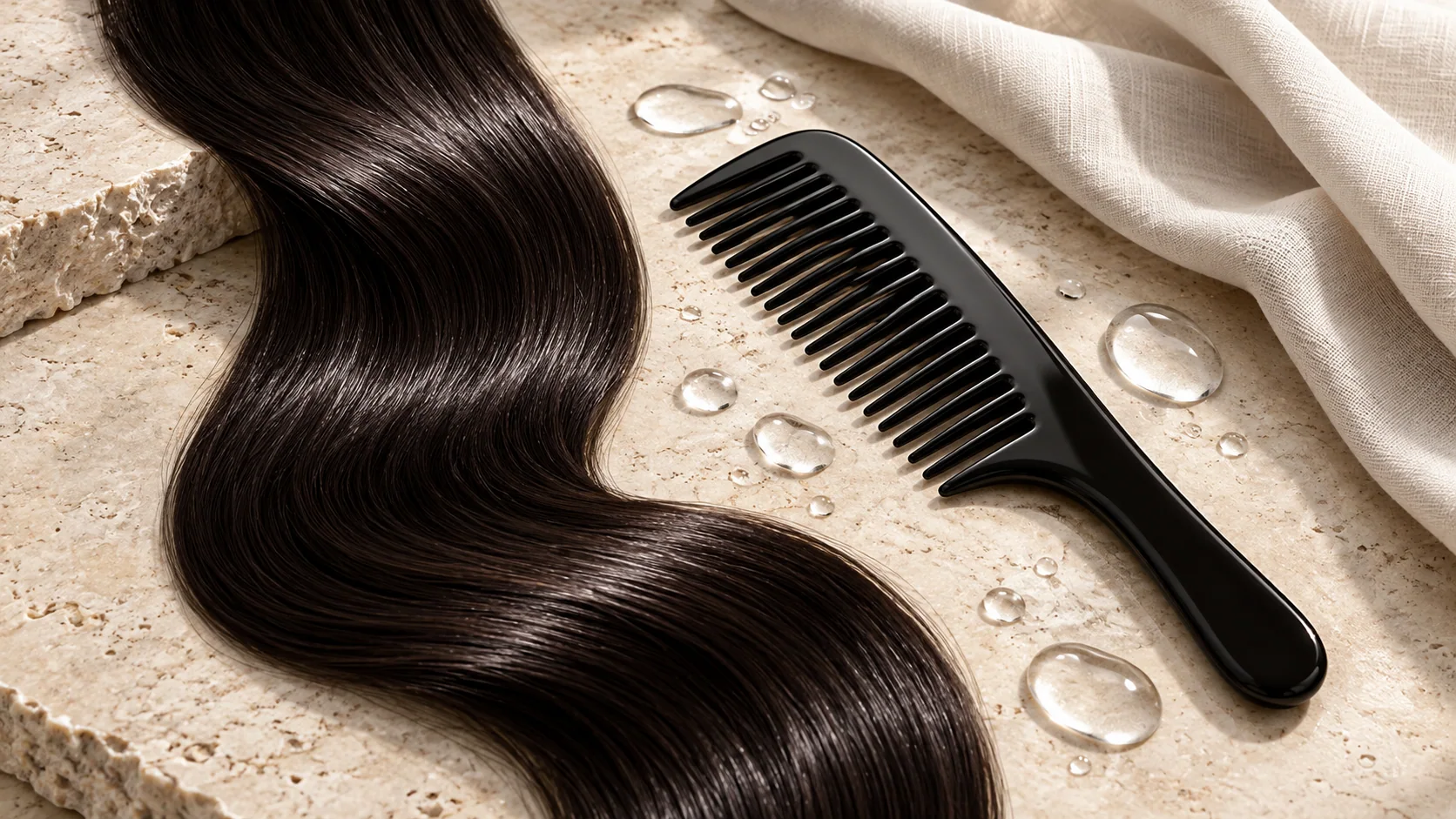
Not every fallen fibre has left the root.
Shedding begins at the follicle. A hair completes part of its growth cycle and releases from the scalp. Breakage happens to the exposed shaft: the fibre fractures between root and tip. Both can leave hair in the brush, shower or on clothing, but they are not the same event.
Broken pieces are often shorter or uneven in length, and a head of hair affected by breakage may show flyaways, rough ends or reduced length retention. Shed hairs are often closer to the person’s full hair length. A small pale club at one end can occur on a naturally shed telogen hair, but roots are easy to misread without magnification; one strand is not a home diagnostic test.
Observe the pattern across several wash and styling days—not the drama of one shower.
Timing belongs beside the strand.
Increased shedding may become noticeable months after a major illness, high fever, surgery, childbirth, substantial weight change or a period of marked stress. Medication changes can also matter. These associations do not prove a cause, and prescribed treatment should never be stopped without speaking to the clinician who manages it.
Pattern adds information. A widening part, receding hairline, expanding patch or progressive reduction in density is different from finding variable short fragments after frequent heat, chemical processing or forceful detangling. Some people can experience more than one process at the same time, which is why persistent change deserves examination rather than a product experiment.
Cosmetic care can change friction—not follicle biology.
A considered wash routine supports the material that is already outside the scalp. Place shampoo primarily where oil and residue collect, rinse completely, and use appropriate conditioning slip through the lengths. Detangle gradually, beginning at the ends, and adapt technique to texture rather than forcing every hair type through the same rule.
Reduce repeated high heat, rough towel friction, aggressive brushing and styles that remain painfully tight. These choices can lower avoidable mechanical stress and help fragile lengths remain more manageable. They do not diagnose the reason for increased shedding, restart an inactive follicle or replace treatment for a hair-loss disorder.
Know when observation has done enough.
Seek a qualified medical assessment for sudden or patchy loss, a visibly widening part, steadily decreasing density, or shedding that feels persistent or unexplained. Pain, intense itch, burning, redness, thick scale, sores, pus or loss involving eyebrows and eyelashes also moves the question beyond cosmetic care.
A dermatologist may review the timeline, scalp, density and shaft, then decide whether a pull test, magnified examination, blood work or another investigation is appropriate. The value is not simply naming hair fall; it is identifying which process is occurring before choosing what to do next.