THE SCALP
Living skin
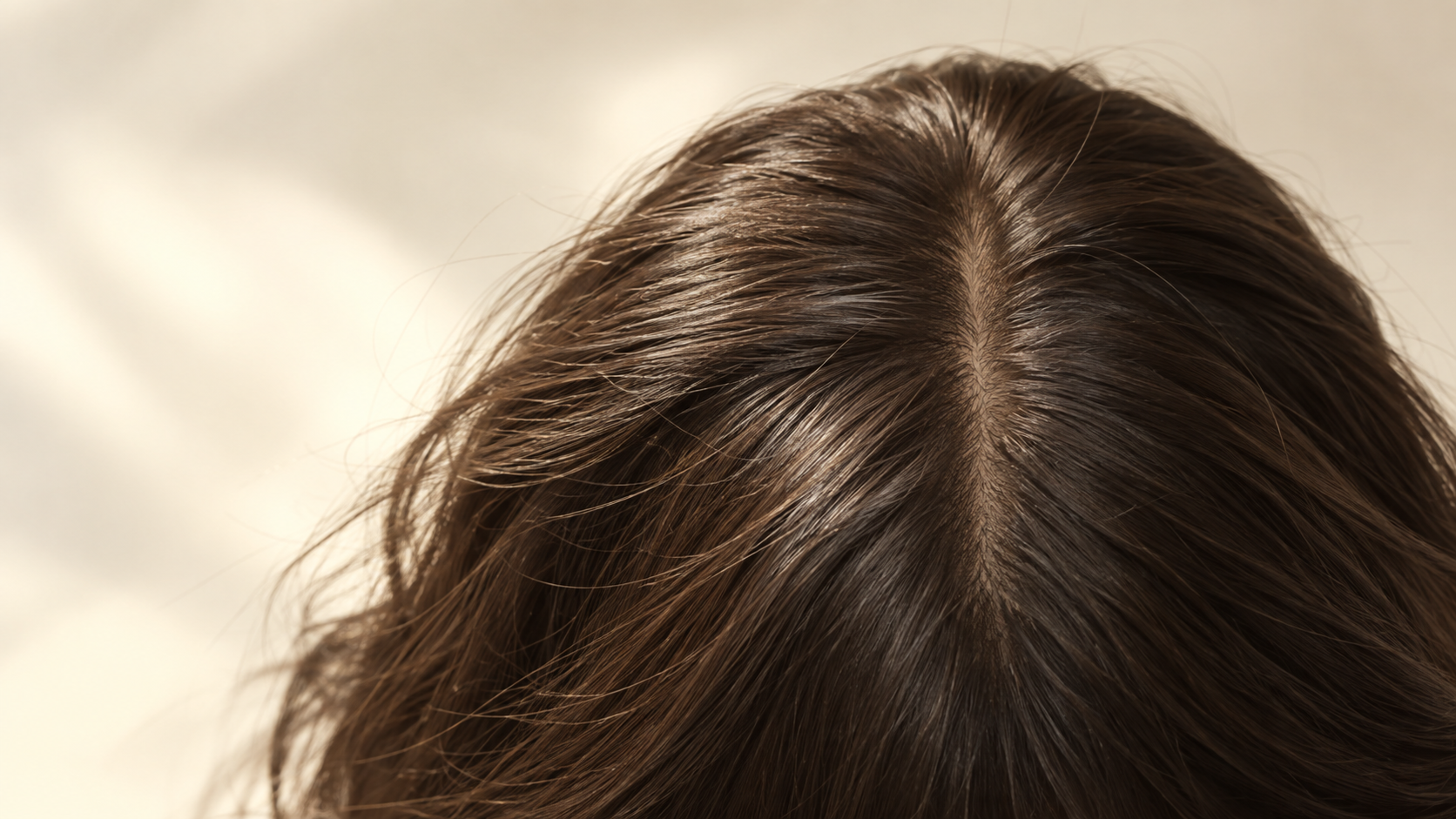
The scalp has a barrier, oil glands, nerves and an environment that can change with climate, products, health and time. Comfort, scale and sensitivity belong here.
THE HEAREA PERSPECTIVE
Not a promise to turn back a clock. A clearer way to understand what changes, what accumulates and where cosmetic care belongs.
Begin with the structure
ONE SUBJECT · THREE STRUCTURES
“Hair ageing” can collapse several different processes into one phrase. The living scalp, the cycling follicle and the exposed fibre are connected, but they are not interchangeable. Useful care starts by naming the structure involved.
THE SCALP
The scalp has a barrier, oil glands, nerves and an environment that can change with climate, products, health and time. Comfort, scale and sensitivity belong here.
THE FOLLICLE
The follicle produces hair through repeating growth and rest phases. Density, growth rate and pigment can change, but a cleanser cannot diagnose or reverse a follicular disorder.
THE FIBRE
Once hair emerges, the shaft is no longer living tissue. Lengths accumulate sunlight, water, friction, heat and chemical processing—especially toward the older ends.
THE FOUNDATION
WHAT SHAPES CHANGE
These categories help organise the question; they do not calculate a “real hair age” or identify the cause of an individual concern.
Genetics, hormones and the passage of time influence pigmentation, growth cycling and density. The pattern varies greatly between people.
Washing, brushing and ordinary friction accumulate along the fibre. Longer hair records more repeated handling at its ends.
Ultraviolet exposure can alter hair protein, pigment and surface properties. The visible result may include colour change, dryness and roughness.
Bleaching, dyeing, straightening and repeated high heat can increase fibre damage. Technique and frequency shape the total load.

READING WHAT YOU NOTICE
A wider part or reduced fullness can reflect many causes. A gradual change and a sudden change are not the same question.
Greying reflects reduced pigment production in the follicle. Grey hair is not, by definition, unhealthy or damaged.
Roughness, dullness, tangling and split ends often describe fibre weathering rather than a single scalp problem.
Persistent itch, pain, sores or marked scale deserve attention beyond cosmetic experimentation.
AN EVIDENCE FILTER
Appearance alone cannot separate biological change, pattern hair loss, breakage, scalp disease and styling damage.
Shampoo can cleanse the scalp and improve cosmetic feel; it should not be presented as reversing biological ageing or treating an unexamined hair-loss condition.
Pigment change is one visible aspect of time. The care question is texture, comfort and preference—not restoring an invented ideal of youth.
A CONSIDERED ROUTINE
Cleanse according to scalp need. Reduce unnecessary friction and very high heat. Handle wet hair gently. Use hats or physical shade to protect exposed scalp from strong sun. Introduce one new product at a time so its effect remains legible.
See the HEAREA Method
WHEN COSMETIC CARE IS NOT ENOUGH
Seek qualified medical assessment for sudden, patchy or rapidly progressing hair loss; a painful or inflamed scalp; sores; scarring; or symptoms that persist despite simplifying the routine. Earlier assessment can matter because hair loss has many possible causes.
COSMETIC CARE · IN CONTEXT
FURTHER READING
This HEAREA page is independently written for general education. It does not reproduce the referenced brand page and is not medical advice.
Photoaggravation of Hair Aging — review of UV-related fibre changesWhat Ages Hair? — review of follicle change and fibre weatheringAmerican Academy of Dermatology — causes of hair lossAmerican Academy of Dermatology — gentle care when hair is thinning